
Eco-Schools accredited nurseries
Learning to care for our world
The Eco-Schools programme brings environmental learning into everyday nursery experiences, helping children explore the natural world and discover simple ways to care for it.
Through hands-on experiences, children can explore topics such as nature, biodiversity, recycling, food, water and energy. It makes sustainability something children can see, explore and take part in as part of nursery life.
What is the Eco-Schools programme?
Eco-Schools is an international environmental education programme for schools, nurseries and other educational settings.
Our nurseries work through a seven-step framework, involving children in exploring environmental issues, identifying areas where they can make a difference and taking practical action.
Nurseries can work towards the internationally recognised Eco-Schools Green Flag Award, demonstrating their commitment to environmental education and action.
Key principles of the Eco-Schools approach
Environmental care
Caring for our worldEveryday experiences introduce ideas such as recycling, reducing waste, saving water and supporting wildlife, helping children explore how we can care for the environment.
Active participation
Learning by taking partChildren can get involved in environmental projects, from planting flowers and collecting water to litter picking, making learning practical and meaningful.
Sustainable habits
Everyday choices matterSimple experiences around recycling, saving energy and reducing waste give children opportunities to explore more thoughtful ways to use resources.
Holistic learning
Learning through natureFrom counting seeds and watching plants grow to working together on projects, environmental experiences can support learning in practical and engaging ways.
Exploring our world through everyday experiences
Children can take part in practical projects around topics such as recycling, composting, reducing waste and saving energy.
These experiences give children opportunities to explore environmental ideas by doing, rather than simply hearing about them.
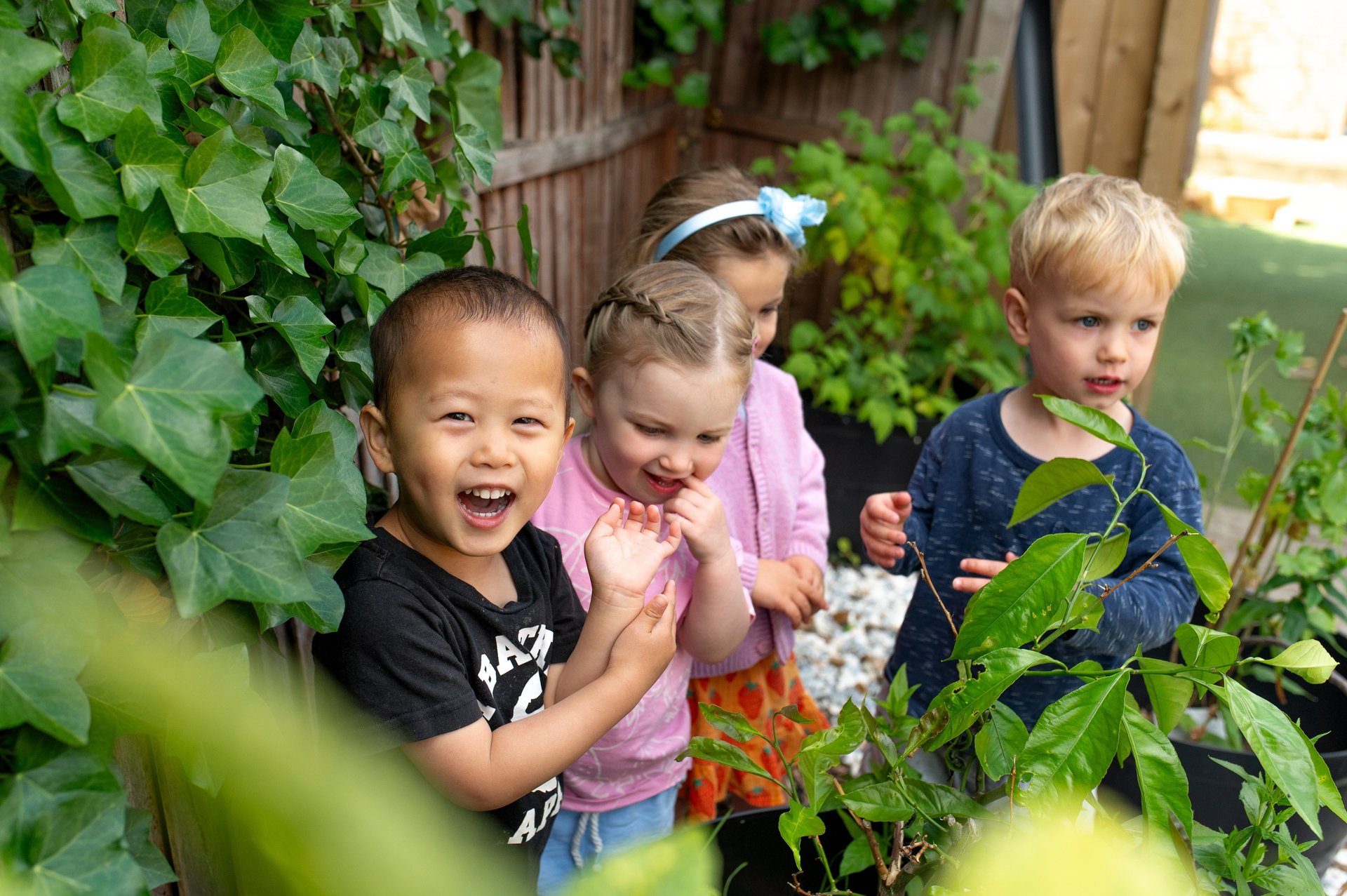
Planting flowers, growing fruit and vegetables and creating spaces for wildlife can help children explore the natural world firsthand.
Children follow the lifecycle as they go on a journey of planting a seed, caring for it as it grows, harvesting what they have grown, creating a meal and then discovering what happens to food waste through composting.
Nature walks, bug hunts and other outdoor experiences encourage children to notice what is living and growing around them.
Looking closely at plants, insects and changing seasons can inspire questions, conversations and further exploration.
Reusing suitable materials in creative activities can introduce children to the idea that something doesn't always need to be thrown away when its original purpose is finished.
Materials can be transformed through making and imaginative play, combining conversations about reuse with opportunities for creativity.
Find an Eco-Schools nursery
What might children experience?
What a Eco-Schools nursery can feel like
Every Eco-Schools nursery has its own character and priorities, so environmental learning can look different from one setting to another. Children may take part in a variety of hands-on experiences that reflect their interests, nursery environment and the environmental topics their setting is exploring.
-
Growing and gardening
Children might plant seeds, grow fruit and vegetables, care for flowers or create spaces that encourage wildlife into their nursery garden.
-
Everyday sustainable choices
From recycling and composting to thinking about water and energy, children can become involved in simple environmental actions as part of everyday nursery life.
-
Exploring their local environment
Children might take part in nature walks, bug hunts, litter picks or other activities that help them discover and care for the environment around their nursery.

How can Eco-Schools support children's learning?
Explore the natural world
Observe and discoverHands-on experiences encourage children to notice, investigate and ask questions about the world around them.
Think about problems and possibilities
Explore their ideasEnvironmental projects can encourage children to think about what could change and contribute their own ideas.
Take part and contribute
Making a differenceChildren can get involved in projects and explore the part they can play in caring for their environment.
Learn through real experiences
Learning by doingGardening, recycling, measuring and making can connect environmental topics with wider areas of early years learning.
Work together
Sharing ideasEnvironmental activities give children opportunities to communicate, make decisions and work towards something together.