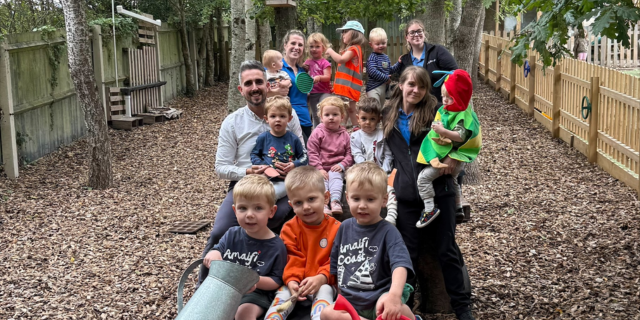




Every parent knows that time really does fly. It feels like children go from newborns to starting their first day at nursery in the blink of an eye. Although this new phase can be nerve-racking, there are things you can do to actively support your child, and yourself, to help prepare them for their next chapter of starting nursery.
At Grandir UK, we have been providing nurturing and reliable childcare to families for over 25 years. Along the way, we’ve learnt a thing or two about supporting the home-to-nursery transition period and giving children the best possible start to their early years learning journey. One special way we do this is through our settling in sessions which support children and families through the home-to -nursery transitional process.
We don’t want you to feel alone during this big change, so here are our five top tips to help prepare both you and your child for nursery.
Try and get your child used to other people

Not every child reacts to socialising in the same way; some children might dive right in and find it easy, and some might take some time to warm up; both reactions are completely normal and depend entirely on the temperament of your child. If you haven’t already, introducing your child to small groups of children and adults is a great way to boost their confidence and help them get used to the idea of being around other people outside of their family members.
This can be done by attending social environments like playgroups, play dates, parks, children’s centres, and parent-and-baby or toddler groups – not only will they have a lot of fun, but it also creates an opportunity for them to develop their social skills and meet some new people, making the nursery environment filled with new faces a little less daunting.
Tip: Local council websites, local Facebook groups and libraries are great places to find social groups and sessions for parents and children.
Introduce the idea of nursery
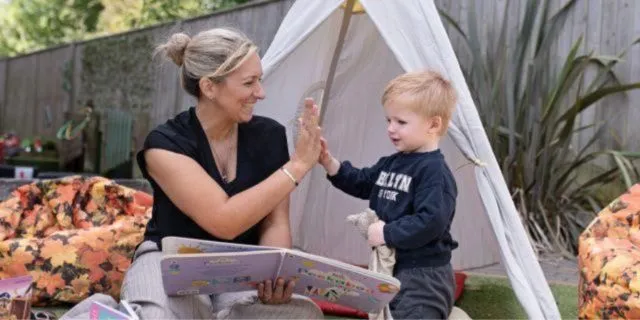
If your child is 18 months or younger when starting nursery, a great way to introduce them to the idea is through books about starting nursery. Putting some time aside to read books on this topic with your child will help them become more comfortable and familiar with idea. While reading together, try to make it as engaging and interactive as possible by pointing out things in the pictures. For example, if a child in the book is doing a certain activity or if they’re waving goodbye to their parent during drop off, you could act it out together.
If your child is old enough, engaging in conversation with your child about nursery is a great way to gently introduce them to the idea of going. Try to talk about nursery in a positive way and position it as a fun and enjoyable place where they’ll make lots of friends – although this is a small thing, it can make a big difference to your child’s view of nursery. With this said, this doesn’t mean you have to suppress your true feelings about this milestone; it’s completely normal to feel anxious or emotional. It’s important to be mindful of how you talk about nursery in front of your child, as young children can easily pick up on the emotional tone of adults around them. This is a great opportunity to model how to deal with and talk about big feelings.
Tip: To make it more personal, you can try talking about the start of your education journey (if you can remember!).
Practice short separations
If your child has always been cared for by you, the idea of them leaving and transitioning to a childcare setting can be quite worrisome for both you and your child. In the lead-up to the first few weeks of nursery, it’s a good idea to filter in short separations as an effective way to reduce separation anxiety and introduce the idea of short separations before their start date. For example, you could try leaving them with a trusted friend or close family member. It can start with as little as 10 minutes and work its way up so that your child learns you will always return.
Games like peekaboo for little children and hide and seek can also prepare your child by helping them realise that even if you disappear, you will return.
Tip: Start with a short separation time and then extend the time by a few hours in the build-up to their start date.
Build a nursery-style routine at home
What happens during a typical nursery day is often routine based. Building a consistent nursery-style daily routine at home not only makes children feel safe and secure but is also a great way to get them used to following regular naptimes, mealtimes and play times, which will help ensure a smooth transition into nursery.
This can also be applied to younger children in a slightly different way. For example, introducing familiar patterns around walking, feeding, naps and playtime and using the same words, songs or actions before activities such as mealtimes, nappy changes or sleep to help them understand what’s happening next and feel more confident with change in general.
Tip: Make the new routine visual! This can be a colourful chart or bulletin board which allows your child to see how their day will unfold.
Book settling in sessions

To help your child settle into nursery school life, most nurseries offer settling-in sessions, which help them get familiar with their new environment, adapt to the new routine, meet new friends and form an attachment with a key person (who will be a familiar face who will be primarily caring for them). These sessions are also a fantastic opportunity for parents to meet the nursery team, gain insight into the educational programmes and activities their child will be taking part in and gauge a feel of what the nursery environment is like.
Grandir UK nurseries will require you and your child to have a minimum amount of settling in sessions as we believe these are crucial to how well your child transitions and settles into nursery life.
Tip: We recommend bringing along a comfort item like your child’s favourite teddy for added emotional support during the process.
Bonus tip: Last day treat
As a last hoorah before your child starts nursery, doing something exciting with them the day before, or a couple days before, their first day is a great way to mark the end of an era and the start of a new one. This can be anything from a wholesome farm trip to a fun soft play session.
Also, if you’re in the scenario where you’re returning to work, try and arrange for your child to start nursery a day or two before your return to work. This is so you have a little bit of time to process your emotions about the end of a journey and the start of a special new one.
What to pack in your child’s nursery bag?

Since we’re on the topic of starting nursery, here’s a quick list of items we recommend packing in your child’s nursery bag when the first day comes:
- Spare clothes
- Comfort items like your child’s favourite toy
- Weather appropriate clothes and items, e.g. a sun hat, sun cream, a raincoat for rainy days
- Any required medication
- Outdoor shoes
- Sterilised bottles and formula/breastmilk, if needed
- Nappies, wipes and nappy rash cream (if not already provided by the nursery)
Tip: Always remember to label your child’s bag, seasonal items and spare clothes.
Final thoughts
Starting nursery is a big milestone for both children and parents, and it’s completely natural to experience a mix of excitement, pride and perhaps a few nerves along the way. With a little preparation, encouragement and support, you can help your child approach this new chapter with confidence and curiosity. Remember, every child settles in at their own pace. By creating positive experiences, building familiarity with new routines and offering plenty of reassurance, you’re giving your child the confidence they need to take their first steps into the wider world.
If you’re looking for a nursery where your child can feel safe, supported and inspired to learn, explore and grow, find your local Grandir UK nursery today and book a visit or attend one of nursery open days. We’d love to welcome you and your family and be part of this exciting early years journey.
Tags
Share this article


Related blog/news
Swipe to see our latest articles.