

Blog
How to help children talk about their feelings through everyday play
Blog

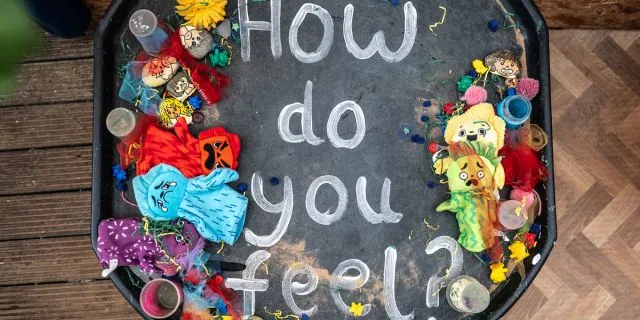
Children experience a wide range of emotions from birth, but younger children do not always have the words to explain how they feel. Whether they are excited, worried, sad, or angry, learning how to recognise and express emotions is an important part of emotional and brain development in early childhood.
In the early years, play can be a powerful tool for helping children express emotions, build emotional language, and develop the skills they need to understand and manage their feelings throughout life.
Why emotional development matters in the early years
Research shows that children begin developing emotional awareness from a very young age. As children learn to identify feelings and recognise a particular emotion in themselves and others, they also begin to develop self-regulation and emotion regulation skills.
These skills can support children throughout life by helping them:
- Manage their emotions
- Cope with big emotions
- Build relationships
- Develop confidence
- Communicate their needs
- Understand body language and social cues
For families and early years educators, supporting children emotionally can help create a calm and positive environment where children feel safe enough to explore emotions and start talking about their own feelings.
Helping children express emotions through play
Play gives children opportunities to express themselves naturally, especially when they are still developing emotional language. Through creative and imaginative activities, children can practise naming emotions, reflect on situations, and begin to understand how emotions can affect behaviour.
Role play and storytelling

Role play can help children understand emotions in a safe and supportive way. Pretending to care for dolls, acting out family situations, or talking about storybook characters allows children to explore emotions and notice how others may react to different situations.
For example, a child might act out a character feeling sad after losing a toy or angry during a disagreement. These moments can help adults gently label feelings and encourage children to talk about why a particular emotion may occur. Families can support these conversations by asking simple open-ended questions such as “How do you think they’re feeling?” or “What could help them feel better?”
Creative play and emotional expression

Creative and expressive activities such as painting, drawing, or building with recycled materials can support emotional well-being by giving children different ways to express feelings without pressure. Simple resources like cardboard boxes, fabric scraps, bottle caps, and age-appropriate loose parts can encourage children to reflect, practise communication skills, and develop emotional awareness through play.
These activities can also help children who may be struggling to find the words to express a strong emotion. Sometimes, younger children communicate more through body language, facial expressions, and creative play than through conversation alone. A lot of these types of activities are sprinkled throughout children’s nursery days.
While completing creative activities together, families can encourage emotional expression through gentle prompts like “Can you tell me about your picture?”, “What colours match how you feel today?” or “What do you think your character is feeling?” These small conversations can help children feel more comfortable talking about emotions naturally.
The importance of supportive conversations
Supporting children emotionally does not mean having formal discussions about mental health every day. Often, the most helpful moments happen naturally through listening, play, and everyday interactions.
Adults can support children by:
- Naming emotions during play
- Helping children identify feelings
- Encouraging children to talk
- Staying calm during difficult moments
- Helping children understand that all feelings are normal
- Modelling positive emotional strategies
For example, saying “You seem worried,” or “I can see that made you feel angry,” can help a child understand and recognise their emotions over time. With this said, it’s still important to maintain boundaries during these moments. For example, if your child is expressing their frustration by hitting you can say “I can see you are angry because of XYZ but it’s not okay to hit me” and offer an alternative way for them to release the emotion, such as squeezing a cushion, taking deep breaths, drawing, or having some quiet time together.
This method acknowledges your child’s feelings, helps them understand boundaries, and provides a safe alternative for expressing emotions.
Helping children develop emotional skills for life

Learning to understand and manage emotions is an important part of child development. While children may sometimes struggle with a negative emotion, frustration, or anger, supportive environments can help them develop the ability to cope with challenges and feel more in control of their emotions.
In the early years, simple activities, caring relationships, and opportunities for play all help children develop emotional skills that can support their well-being throughout life.
While some children may need more help than others, creating opportunities for emotional expression through everyday play can make a meaningful difference for children as they grow, learn, and develop confidence in understanding themselves and others.
There are also many helpful resources that can support emotional learning at home and in early years settings. One book we particularly enjoy using in our nurseries is The Colour Monster: A Story About Emotions, which introduces emotions through colours and simple storytelling in an engaging and accessible way for young children.
Families looking for further ideas around emotional regulation, responsive parenting, and supporting children’s emotional development may also find resources from Nurtured First helpful.
If you’re currently a family in one of our nurseries, or are looking for a nursery that aligns with your family values, please do chat to your local nursery manager about how we can further support your family in your early years journey.
Share this article


Related blog/news
Swipe to see our latest articles.