About us
The Curiosity Approach: Where Imagination Meets Learning
The Curiosity Approach blends traditional wisdom with modern thinking to ignite a love for exploration and discovery.
The Curiosity Approach is a beloved and commonly used curriculum all across the UK, promoting curiosity, creativity, and holistic development in early years education. The Curiosity Approach aims to ignite each and every child’s natural curiosity and wonder in early childhood, setting the foundations for deeper learning later on in life.
What is the Curiosity Approach?
The Curiosity Approach philosophy is a modern day pedagogy that puts the curiosity, awe and wonder of the individual child at the heart of educational principles.
Each Curiosity Approach setting creates aesthetically pleasing play spaces that encourages children to be more active learners, allowing them to choose what they want to play with and learn about.
Founded by Stephanie Barrett and Lyndsey Heller, the Curiosity Approach was inspired by other early years educators, such as Reggio Emilia, Montessori, Pikler, and Steiner, with the purpose of creating students who are ‘thinkers and doers’ instead of passively learning from their nursery practitioners.
The child-led activities allows more room for progression, development and imagination grows with the freedom of choice with each and every child.
Curiosity
Curiosity is at the heart of the Curiosity Approach pedagogy – exactly as the name suggests! The belief is that curiosity provides the foundations for a more engaged learning process in early childhood.
Working simultaneously with child-led learning, it encourages children to think independently and explore their own interests to develop a curious mind.
This encourages them to become more critical thinkers later on in life and take charge of their own development.
Curiosity Approach nurseries create homely and engaging environments that inspires children to move around the room and try new activities through the freedom of choice to play and learn with what they are most interested in.
Curiosity creates the foundations for critical thinking, questioning, and exploring wider subject matters; skills that are important in all aspects of life.
Creativity
The Curiosity Approach is a completely play-based methodology using open-ended resources made out of natural materials.
Unlike playing with toys with a specific purpose, open-ended resources have no fixed identity which means that children can decide for themselves how they want to use that object in their play, opening up a new world where imaginations grow everyday!
Early childhood is a short and precious time in a person’s life, and play involving open-ended resources helps children be more creative, enthusiastic and engaged throughout their childhood and later on in life, making them lifelong learners.
Sustainability
The Curiosity Approach uses a lot of natural materials and recycled resources within its methodology, which is great for both early years stimulation and the planet.
Children learn from their surroundings, constantly reflecting and thriving within their environment throughout their childhood. Therefore, children are naturally learning the foundations of sustainability and recycling from an early age, a key skill that will be beneficial throughout life.
This encourages them to become more critical thinkers later on in life and take charge of their own development.
Curiosity Approach nurseries create homely and engaging environments that inspires children to move around the room and try new activities through the freedom of choice to play and learn with what they are most interested in.
Curiosity creates the foundations for critical thinking, questioning, and exploring wider subject matters; skills that are important in all aspects of life.
Authenticity
While the Curiosity Approach is a modern day pedagogy, it is rooted in tradition and authenticity.
This philosophy ditches plastic and introduces more natural, meaningful items with multiple purposes to spark the awe and wonder in early years children.
Using more natural and authentic items allows children to explore a wider variety of textures and ways to have fun with every day items, such as counting, combing or using them in role play.
Many open-ended resources can be used in collaborative play with peers, encouraging lifelong friendships.
Inside a Curiosity Approach Nursery
The Curiosity Approach methodology can be applied to nursery settings in many different ways. Therefore, it’s important to visit your chosen Curiosity Approach nursery to understand what the environment and activities are like before committing.
That being said, here’s what a typical day-to-day routine might look like at a Curiosity Approach nursery and preschool:
- Natural Play Materials – In the morning, children explore the nursery room, enjoying free time to play with wooden blocks, shells, stones and other items of their own interest. The open-ended resources establish creative play, engaging children’s minds before exploring the other activities for the day.
- Mindful Lunchtime – For lunch, children come together for lunch set up with real plates, cups, and utensils. Older children are encouraged to serve their own food and drinks to foster independence and practice fine motor skills. All children eat together to develop their social skills and connection with their peers, while eating mindfully and showing gratitude and appreciation around food.
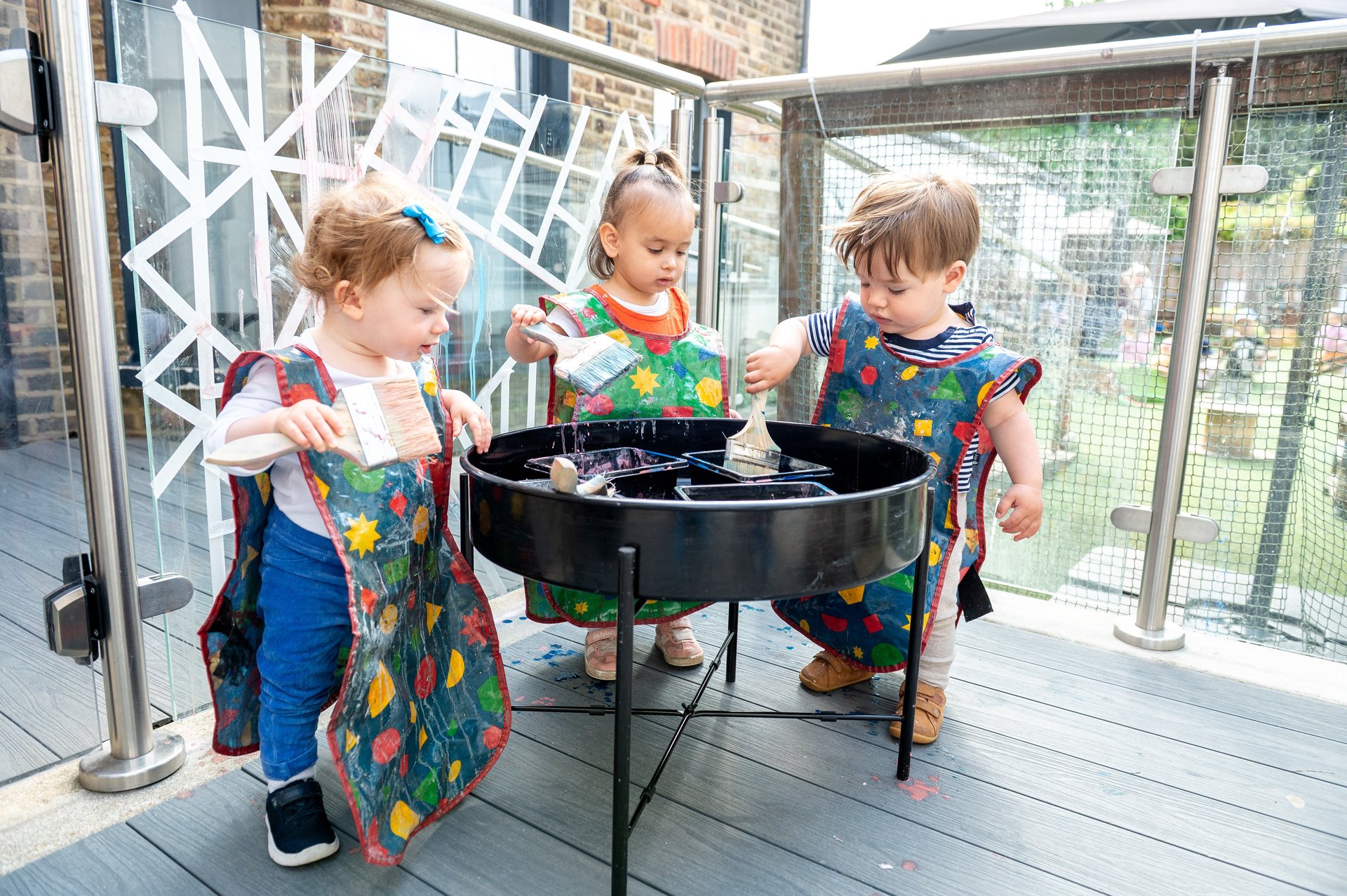
- Child-Led Exploration – In the afternoon, children choose their own projects to work on based on their interests, whether that be painting, crafting, experimenting, collaborative building or more! Nursery practitioners ask questions about their activities and offer gentle guidance and suggestions to help them further their knowledge around their interests.
Why Choose the Curiosity Approach?