

Blog
Why music and movement play an important role in early communication skills
Blog

by Sara Coffey
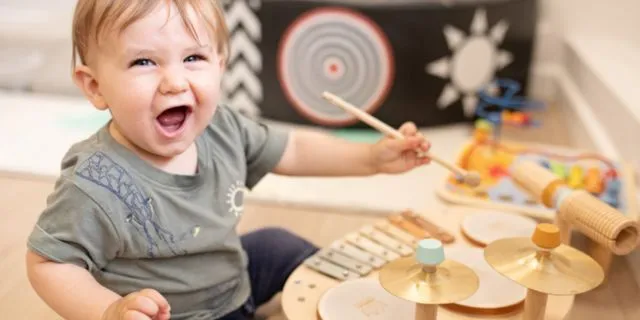
In Episode 4 of Grandir UK’s Parent & Carer Series, we explore the powerful link between music, movement and early childhood communication development. The episode brings together Sara Coffey, Director of Early Years at Grandir UK, and Sue Newman, Director of Operations at Boogie Mites, to unpack how music and movement play an important role in supporting children’s language development from birth through the early years.
While every child’s communication journey looks different, this episode highlights why sound, rhythm and movement are so effective in helping children develop language skills, confidence and understanding – both in nursery and at home.
Why music and movement matter for communication
Communication is far more than learning new words. To communicate effectively, children must learn how to listen, interpret sounds, use body language, express meaning and respond to others. Music supports all of these skills at once.
When children engage with music, multiple areas of the brain are activated together. Sound stimulates emotional responses, supports cognitive development and encourages physical movement, helping children connect what they hear with how they feel and how they move. This cross-brain development is essential for communication skills, as talking is naturally linked with gestures, facial expressions and tone of voice.
Rhythmic awareness is especially important. Recognising patterns in sound helps children follow conversations, take turns and understand how language flows. These early skills later support reading, writing and the ability to hear speech clearly, even in noisy environments like playrooms.
What communication looks like for babies
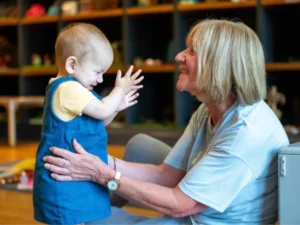
How music supports early brain development
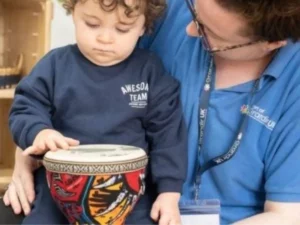
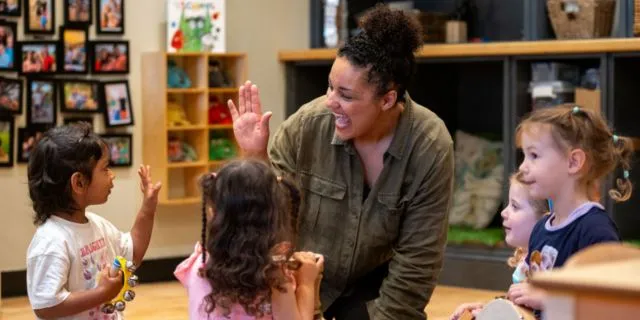
Music is particularly effective because it captures attention and creates emotional engagement. When children sing, clap or move to music, they are using their voice, body and senses all at once. This supports eye movement, coordination and turn taking – all essential communication skills.
By combining sound, movement and visual cues, music helps children remember words, develop new vocabulary and understand how sounds fit together. These experiences provide a strong foundation for early language, early literacy and speech development, supporting children as they begin to follow instructions, answer questions and engage in conversations. Our ‘Move & Groove’ educational programme is particularly great at supporting this!
The Magic Triangle: A foundation for language and literacy
Children who develop a strong sense of rhythm often find it easier to process language, understand meaning and begin to build words into sentences with growing confidence.
Learning musical elements through play
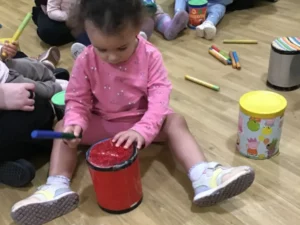
Through music and movement, children begin to explore different sounds in a way that feels playful and engaging. Changes in pitch, tempo, dynamics and timbre help children notice how sounds work together, supporting sound-processing skills and early language development. Being exposed to a wide range of rhythms and musical styles also helps children make sense of the sounds they hear every day.
These experiences often lead naturally into imaginative play, as children move, explore and experiment with sound. Whether they are clapping, dancing or using their voice in different ways, children are building confidence, learning how to express themselves and strengthening the communication skills that support their wider development.
Supporting early childhood communication at home
While Grandir UK nurseries provide language-rich environments that support children’s skills, there are numerous ways families can support communication at home on a regular basis. Children who experience music both at nursery and at home often develop stronger sound awareness before school, supporting early phonics and language development.
Parents do not need to be musicians. Simple activities using everyday objects such as homemade shakers, tapping cups, cardboard tubes or scarves for movement allow children to explore sound and rhythm through play. These activities encourage talking, listening, turn-taking and interaction, helping children build communication skills in a relaxed and enjoyable way.
Working together to support every child
If parents have concerns about a child’s speech or communication, early support is key. Nursery teams work closely with families and, where needed, can suggest additional support or next steps, including speaking with a child’s doctor or a language therapist.
By working together, adults can help children develop the skills they need to communicate confidently, express ideas and engage with the world around them.
Links to useful resources:
- Sign up to access the Boogie Mites ‘Let’s Tap a Word’ song completely FREE here.
- Find even more songs and activities in the Boogie Mites School Ready Parent Pack here.
Watch Episode 4 of Grandir UK’s Parent & Carer Series here to learn more about how music and movement support early communication and language development
Tags
Share this article


Related blog/news
Swipe to see our latest articles.